Friday, September 11, 2015

B2B Networks Are Making a Comeback - 15 Factors For A Successful Reboot

Christian Dahlen & Oana Olteanu



A seemingly endless number of B2B networks was started during the first dot-com bubble. But just as quickly as they had started, they almost all disappeared after the bubble burst in 2001. In the decade that followed, activity in the B2B network sector came to a complete halt and startup activities instead focused on launching and scaling online enterprise software companies. Outside of the enterprise space, massive B2C and C2C networks like AirBnb, Uber and Facebook emerged during the same time to a degree where it might seem that all personal interactions are becoming networks.


Buoyed by the success of these consumer networks and the movement to online enterprise software, there has been renewed interest to launch two sided or even multi sided business network startups in industries such as banking, advertising, commodities, industrial goods and consumer goods.


Is this then a new dawn for B2B networks? How can investors avoid the costly mistakes for the B2B startups during the first dot-com boom? What has changed? Is there anything that can be learned from successful B2C and C2C networks?


The Business Model Canvas has emerged as a useful tool to assess the quality of a startup idea. And while the canvas can also be used to document some of the key assumptions of a business network, it falls short in evaluating the potential success of new marketplace opportunities. The fifteen insights from two seminal blog posts about digital B2C and B2C marketplaces are far better suited to assess B2B networks:  Bill Gurley to evaluate the fundamental attractiveness of a network idea, and Boris Wertz  to devise an effective go-to-market (GTM) approach.
Before a business network is rolled out to customers, the founder and her investors need to understand whether this idea will make money. A test to assess the network attractiveness is needed, just as a compass is required to know which direction to take. Gurley’s ten factors can be used to evaluate and shape such business network ideas. The three key  ‘must have’ factors for successful business networks are being part of the payment flow, having high frequency of transactions, and extending the market through the network. One of the most successful B2B networks that connects buyers and suppliers is successful because the network charges a percentage of the transaction, the frequency of transactions is high, and the availability of the network and its usage extends the market for trading. A similar network with millions of users has been far less successful: the payment model consists of a fixed fee and it is not correlated with the size of the transaction; the frequency of transactions is low;  and the payment is fixed and does not encourage further development. In consequence, Gurley’s ten factors not only assess the relative quality of an idea for a business network; they actually provide insight into whether the business network will be viable.


Understanding this structural attractiveness of a marketplace is a necessary, but not sufficient condition before investing. It becomes sufficient only when the idea has been validated to reduce the risk of failure. In the case of business networks, the failure risk increases exponentially due to the complexity of adoption in a network. There are two or more user groups who need to adopt the network, and they need to do it in a synchronous manner. And in the B2B world the user is often different than the economic buyer, which in turn requires multiple actors and multiple groups of actors to come together at the same time. Successful B2B networks can tackle this complexity by signing up reference customers for each of the user groups. Once this link is established, they replicate the model by connecting similar companies onto the network. This  increases network attractiveness one link at a time. Each link helps to build the chain of connections in the network until the network has a sufficiently large chain of connections, and users voluntarily choose to actively contribute to adopt the network and thus increase its reach. When this happens and the adoption flourishes without push from the network provider, the network has the potential to reach the tipping point and ‘the winner takes all’.


Wertz further defines five factors for sufficiency by addressing the network specific GTM aspects. Often, this is also where those new networks encounter their biggest challenges: Understanding and leveraging buyer and seller communities with a narrow segment focus, relentlessly working to provide additional value to both sellers and buyers, defining KPIs to understand when a tipping point has been reached, and incentivizing community managers - these are some of the more frequent hurdles encountered. Another hurdle in the business software world is represented by the relative newness of the business network concept and the lack of community managers. Product managers and salespeople abound, but none of these are incentivized to build the community and increase network adoption. This was the case of a financial network which scored high on the Gurley test, but struggled to reach wider adoption due to the fact that no one was made responsible for managing the communities.


It is a fallacy to believe that there is an evolutionary way for a typical enterprise software company to evolve into a B2B network. In a network, every part of the business system follows its own set of rules, and new GTM approaches are required to overcome the innovator’s dilemma. Just as the Matrix was rebooted multiple times, new frameworks and tools are in place to turn the failures of the first dot-com bubble networks into a distant memory and to fulfill the promise of ‘the winner takes it all’ economies.

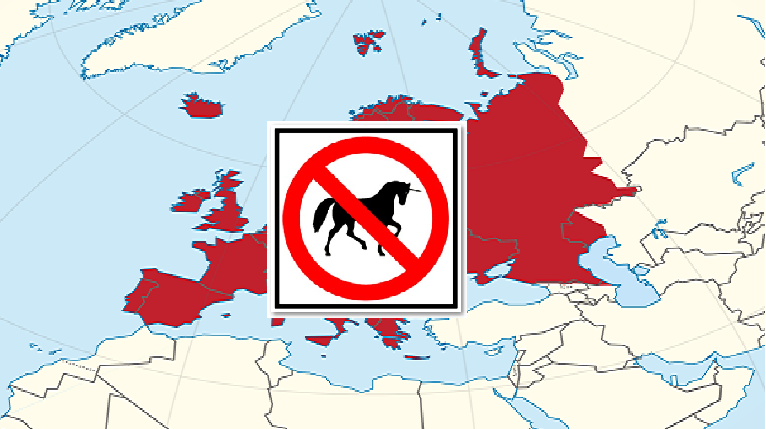
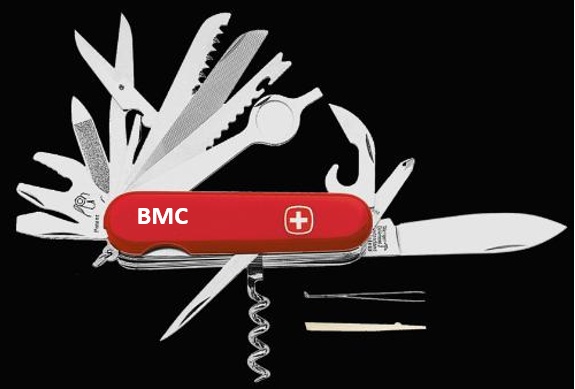
Photo credits here.

Monday, August 17, 2015

Where Are The Unicorns In Enterprise Software In Europe ?


The venture market in the United States has seen a significant number of enterprise software startups go through a successful IPO. Veeva, Tableau, Splunk, Fireeye, Marketo, and Box.com are just a few examples of the past years. Many more privately held enterprise software startups are generating revenues that approach or even exceed $100 million annually and are enjoying $1 billion+ valuations. Clearly, investing in enterprise software can be as lucrative as investing in consumer apps and according to CB Insights, the capital efficiency in enterprise software has even been higher than in consumer tech companies..


When surveying recent exits and private unicorns in Europe, there is a plethora of consumer and e-commerce focused activity. In the enterprise software space, however: Next to nothing. Nada. Nichts. Rien. Nula. Niente.


As an active angel investor in enterprise software with a significant background in working for European high tech companies, this prompted me to dig deeper into this issue: Is my perception right? Are there really no big enterprise related software startups in Europe (and by that, I mean any software that is sold to an enterprise, whether is is to the CIO, other lines of business, or individual employees) ? And if so, what are the reasons: Is it a lack of seed money? Is there a lack of growth capital for enterprise software in particular? Is it that there are no entrepreneurs entering the space? Could it be that entrepreneurs are scared away by the omnipresence of large incumbent providers such as SAP and Sage?
I set out to find the answers to these questions and visited the hotbed European startup activity, Berlin. Here I talked to multiple CEOs of enterprise software startups and several  prominent seed stage venture capitalists.  What I learned was eye opening.


There is very little transparency about startups in the enterprise software sector: Compared to consumer and e-commerce startups, the trade press does not like to write about B2B. Entrepreneurs in this space have historically been focused on running a cash flow positive business without taking in venture capital at the early stages, and hence they ‘fly under the radar’. And while there are many startups in the sector, there is no natural center for them to cluster around and hence no critical mass in one place.


Large company CIOs in Europe appear to have comparatively little risk appetite to work with startups. European venture capitalists also don’t seem have a network of companies who are ready to serve as one the first ten early adopters for a new product. In fact, some people claimed that many venture capitalists of the current generation don’t understand enterprise sales to a CIO, and hence don’t invest in it. On a positive note, investing into software for the lines of business outside of the CIO’s decision power works as well here as it does in the U.S.. More importantly, small and medium enterprises are often the better early adopters of new technology compared to large incumbents. And as one venture capitalist pointed out, startups can be particularly successful selling to other rocket ship startups, for instance in the ecommerce space.


European based series A/B investors are expecting just as aggressive revenue growth rates as their U.S. counterparts: A startup in any European country immediately needs to look beyond the initial borders to tackle a big enough target market. In other words, purely French, Italian, German (name your country here) startups are not viable. The good news is that places like Berlin and London offer a workforce that can cover all of Europe from one location. One venture capitalist was also adamant that Europe alone is not big enough, and that startups therefore cannot ignore doing business in the U.S. And since any capital city in Europe can be reached within an hour or two via a budget airline,  there is no longer such thing as UK venture capital or German venture capital or French venture capital. The larger venture firms such as Index or Mosaic invest their money across Europe. The dispersion of startups across many localities today makes it difficult for angel investors to add value and gain insight in a scalable way.


The bottom line:
Enterprise related software startups in Europe are plentiful and they are investable, but the founders and investors need to be aware of the boundary conditions and challenges imposed by their environment.


If you are an enterprise related software startup and are based in Germany or France in particular, send me an email. If you an investor with a different perspective, I would love to hear from you.

Picture credits here and here.

Monday, August 10, 2015

The Business Model Canvas Is A Swiss Army Knife For Innovation - You Need To Know When To Use Which Tool

Christian Dahlen & Oana Olteanu


Every product owner wants her new product to be successful. Every company prides itself for being innovative. Changes in software development tools and methodologies have made it much easier to build new products. New products are announced and developed at a rapid clip.


But how do we define success? In the software business, license agreements are rapidly being replaced with subscription models which need to be periodically renewed. These contracts can be cancelled at a moment’s notice if the customer does not receive value. And yet, many new offerings never get to customer mass adoption.


Clayton Christensen and Geoffrey Moore have extensively researched the failure of large, incumbent companies to innovate, particularly in the tech sector. Perhaps counterintuitively, their findings identified the inability of those companies to identify new customer needs and segments, and to change their Go-To-Market (GTM) approaches accordingly, as the main reasons of failure to innovate. Hence, innovation requires a company to think about the GTM strategy already in the idea phase.


The Business Model Canvas (BMC) and variations such as the Lean Canvas is a framework that has proven extremely useful to instill this thinking for startups. The canvas provides a holistic view of the business, and makes it easy to iterate on the sheer endless number of innovative business ideas before significant resources are being committed. In particular, the canvas forces startups to pay significant attention to identifying customer segments, marketing and sales channels, and revenue streams.


Less has been said about how larger companies can use the canvas to help innovate.


We used the Lean Canvas version for more than 70 software products across the whole stack, for new and for existing market segments, and at all stages of the product  lifecycle.  For each of the nine canvas tiles, we developed a set of diagnostic questions.


  • Idea stage - customer segments, problem statement, unique value proposition and unfair advantage

    We found the canvas to be particularly powerful when used as the first step in the Investment Readiness Level (IRL) assessment. The canvas is used to assess the potential of the idea before any time and effort are put into development. The problem/solution validation begins with focusing on one customer segment. The users of this customer segment are united by a shared paint point that they urgently need to solve, and they agree that the new solution will provide significantly improved value. Viability and desirability take a front seat and answer the salient question whether the idea is worth a product, and whether it is the right time to invest. The focus on the customer segment and the potential routes to market already highlights whether the innovation will be sustaining or disruptive.  

  • New product development stage - solution, revenue streams, channels

    Once a good idea has been pre qualified with the canvas, the team needs to iterate and find the Minimum Viable Product (MVP) based on customer feedback. The canvas keeps the team focused on the entire business model and fosters discussions among all parties accountable for the whole product. Once the MVP has been built, the focus is on scaling the customer base and developing the corresponding GTM to get to product/market fit. At that point, the canvas has been used to test the whole value chain from customer to revenue to channels. In particular, the right hand side of the canvas is combined with the IRL and can be used to assess whether a product is ready for launch.

  • Later versions and sunsetting stage - Customers, revenues, cost, and the whole canvas

    For mature products, a product owner needs to decide whether she wants to continue investing, maximize margin, or sunset a product. By evaluating the customer problem to be solved, revisiting users and buying centers, and testing the unique value proposition, we found the canvas to be a useful tool to help make these decisions. For example, in one case a product extension of an existing product to a new use case promised to generate new revenues, and justified significant new investment in development, while keeping the GTM the same.

The canvas is an incredibly rich and flexible tool set which, in large companies, becomes even more effective when combined with complementary frameworks such as the three horizons model, customer development and the investment readiness level scale. We found that the canvas is a must-have framework that helps diagnose and improve business model innovation by emphasizing that customer validation is essential for product adoption, thus for product success. Its usefulness is entirely driven by stressing the right topics at the right stage, and by asking the right questions for each of the canvas tiles.


Picture credits here and here.

Tuesday, August 4, 2015

Why Culture Needs to be the Fifth Element of any Company

Article reposted with permission from Oana Olteanu


Why Culture Needs to be the Fifth Element of any Company
Peter Thiel’s single most important piece of advice for Airbnb is ‘Don’t fuck up the culture’. Other executives and venture capitalists like Brian Chesky, Ben Horowitz, and Steve Jobs have expanded on why culture is important for a startup company, and Marc Andreessen's tweet ‘...Ruin Culture -> Destroy Company’ summarizes the point neatly. No doubt, culture is crucial for success.
The Fifth Element in the eponymous movie contains four stones with the classical elements. It combines them all into a divine light capable of defeating the evil . Company culture combines the power of other four elements: vision, mission, strategy and priorities.

Ten employees at a now large software company described the key values when they joined this company as a startup 30 years ago. These values were critical in turning the small startup into the highly successful market leader that it is today. They should be applicable to any budding startup team:

Read the rest of this post on the original site >>


Sunday, March 22, 2015

How JARHEAD killed the LAMP stack


The term LAMP stack was coined in 1998. It commonly includes the Linux operating system, the Apache HTTP service, and the MySQL relational database. P stands for PHP as the programming language, although the letter has also been applied to include Perl and Python. Importantly, all of these components are free and open source.


Much has changed since then, and LAMP was declared dead as early as 2012. A recent informal survey of my portfolio startups has confirmed this new reality:


  • Everything Javascript (Backbone, Ember, Angular.js) and Ruby at the front end
  • Apple  iOS and Android on the mobile side
  • Ruby and node.js at the backend; Python not far behind.
  • Heroku is most popular compute platform, followed by EC2 followed by Azure
  • Database of choice: PostgreSQL. There also is some use of MySQL and MongoDB, but not much.

In short: The LAMP stack is dead, and a JARHEAD is the killer.

Friday, January 30, 2015

Connect With Visionary Customers Face To Face, Hand To Hand

By Christian Dahlen & Oana Olteanu


There are two type of customer roles involved on the way to product/market fit: Executive sponsors - the buyers and decision makers -  meet at least twice a year. These executive sponsors provide validation of the use case and are future references to gain credibility in the market. A word of caution: As opposed to the users, they have much less patience for multiple product iterations.


The users act as sounding boards and listen to a product proposal such that the product team can explore and rehearse the proposition more fully to align the economic incentives of all the group members. This user sounding board function should not be confused with a council for market development or with industry advisory boards - those come at different stages of the development process.


The product team has one-on-one interactions with the users. It is fairly straightforward to define the minimum set of requirements, and hence iteration cycles can be rapid, using one hour feedback sessions every 2-4 weeks. Each iteration begins with the customer selecting which stories the team will implement during the iteration, and ends with the team producing something for the customer to react to. In these rapid iteration cycles, the team moves from storyboards to a prototype of the proposed user experience with minimal functionality in the least amount of time. With today’s tools, the prototype is quick and inexpensive to build. As long as the user experience is plausible, the backend processing and data can be simulated. A word of warning: Users tend to provide positive feedback during all stages, until they actually have to use the product.


These one-on-one relationships help establish clear accountability on both sides. Initial on-site workshops with select customers are helpful in building rapport, but remote video conferencing interactions are perfectly suited for the monthly follow-up. The value from these interactive user interviews is far higher than from any type of survey or from indirect feedback.


These visionary customers are part of the team and deserve to be rewarded, feted and nurtured: Invite them to company customer events, award them with certificates for their part in the effort, and leverage them in promoting the new product.


Many thanks to Allen Bannon and Ryan Nichols for providing input and feedback.

Photo credits: gettyimages.com

Focus On Business Outcomes And Drop The Features

By Christian Dahlen & Oana Olteanu


On the road to defining a minimum viable product (MVP), individual customers would be expected to have a very limited frame of reference. By definition, they cannot imagine what they don’t know about emerging technologies. Even the visionaries should not be trusted to come up with solutions, rather, customers should be asked only for outcomes, i.e. what a new product can do for them. Otherwise, one of the dangers of listening too closely is the tendency to make incremental improvements.


The product owner articulates her best hypothesis as to what value will drive customers to adopt her product, the business model to deliver the product, and which customers the product is most relevant to. The business values are defined and periodically measured to verify that the practice is working. The business value can be determined by ranking the relative importance of the business value/outcome for the customers. In one case, the customers were given $100 in play money which they could allocate to the business values they wanted most and the results were stack ranked to yield the most important elements.

To minimize feature creep, the product owner needs to understand how upset the customer would be if a feature would be taken away. In one case, it turned out that 80% of the planned features were not related to any of the top business values requested. A final word of caution: For certain types of solutions, business value is only created if people actually derive some personal value from using the solution.


For new versions of existing products, it is not about what a particular customer thinks is important to add. Instead, the product owner needs to focus relentlessly on studying the live use of the business value metrics - what matters is what actually moves the needle on the metrics that matter.
We have heard of one executive who uses a very low fidelity MVP to identify the initial price point. She then picks a number - say $50 thousand - , and asks a customer whether they are willing to pay that amount. Before the conversation with the next company, she doubles the price, until she hits the ceiling. She does this by talking to as many companies as needed, typically between 10 and 20. By overpricing and underselling, she can gauge the level of gain customers experience via the amount that they are willing to pay.

Read next: How to engage with users and with buyers.

Special thanks to Allen Bannon, Ryan Nichols and Riley Scott for their insights.


Photo credits: fantastique-arts.com