Showing posts with label How to manage. Show all posts

Monday, March 15, 2021

The Three SaaS Growth Qualities of Qualtrics

Qualtrics filed its  S-1 on December 28, 2020, and went public on January 28. The filing provides a good opportunity to showcase three key SaaS metrics: Revenue growth, the ‘Magic Number’ as a proxy for sales efficiency, and the ‘rule of 40’ as indicator of how fast-growing SaaS companies balance growth and profitability.

In fact, much has been written about the definitions of various metrics. There is broad consensus in the investment community that GAAP principles are not suitable for SaaS companies, and that a different set of metrics is needed to actually run a SaaS company and to benchmark performance against a peer group of competitors on a quarterly and annual basis. 

It is important to note that no definition is ‘better’ than the other but it rather matters to pick one definition and execute against it. Scale Venture Partners in Silicon Valley has probably most extensively used, benchmarked, and written about SaaS metrics, and they have defined ‘Four Vital Signs of SaaS’


30+% year on year revenue growth


Revenues increased by 39% between 2017 and 2018 in the run-up to the planned 2018 IPO, 47% between 2018 and 2019 in the first year after the SAP acquisition, and 31% between 2019 and 2020 for the first 9 months where the second and third quarter of 2020 were fully affected by the uncertainties brought on by the Coronavirus.

This compares to 17% revenue growth at Medallia and 20% revenue growth at Surveymonkey, Qualtrics’ two main competitors, based on data from the BVP Nasdaq Emerging Cloud Index.

The share of international revenues steadily increased from 23% in 2018 to 26% in 2019 and to 28% in the first nine months of 2020. 


Magic Number >1 is a proxy for sales efficiency


For a recurring revenue business, the most intuitive way to measure the ‘Magic Number’ is by dividing the New ARR for the quarter by the fully-loaded Sales & Marketing spend for the previous quarter. A Magic Number greater than 1x tends to be a compelling business investment, and a sample of public SaaS company benchmarks can be found here. 

Public companies don’t report ARR, but Scale has found a nifty way to approximate new ARR by multiplying the intra-quarter difference in GAAP subscription revenue by 4 to annualize it.

Qualtrics’ has generated steady annualized ARR growth of about $35 million in each quarter. The net retention rate (NRR) has consistently been above 120% in each of the past eight quarters.

Applying this math to Qualtrics results in a Magic Number of 1.0 in 2019, and 0.9 for the last seven quarters. 

There are lots of reasons why this metric is way too simple, and some important assumptions have to be made around the revenue accounting* and the sales and marketing expenses**. But as Scale Venture notes: ‘However the Magic Number has one redeeming virtue that in our view outweighs all the negatives. Because it is a GAAP based number it is freely available for all public companies and it is comparable between companies’.


Rule of 40


SaaS management teams are often driving towards either rapid growth or increased profitability, and the Rule of 40 has become a construct for framing the balance of these two phenomena. The Rule of 40 (‘Ro40’ or ‘efficiency score’) states that, at scale, a company's revenue growth rate plus profitability margin should be equal to or greater than 40%.

A ten-year look at the data shows that the Ro40 has remained quite consistent among public SaaS companies, suggesting that the measure is a useful barometer of the balance between a business' expansion and profitability, and by extension, the general sustainability of company performance over longer intervals of time.

In 2019 Qualtrics clocked 47% revenue growth at a negative -4% FCF margin to yield a 43% efficiency score. This was slightly down from 2018 50% efficiency score based on 39% revenue growth and 11% FCF margin. During the first nine months of 2020 revenue growth slowed to 31% and the FCF margin dropped to -13% to yield a 18% efficiency score. 
Medallia is sporting a 14% efficiency score and 17% and SurveyMonkey 34% based on data from the BVP Nasdaq Emerging Cloud Index .

_______________________________________________________________________

* Qualtrics’ professional services were included in the Magic Number calculation. They are comprised of research services, implementation services, and engineering services. They are non-recurring and account for approximately 25% of total revenues. Qualtrics’ professional services typically increase proportionally to subscription revenues and account for approximately a quarter of total revenues, but took a downturn in 2020.

** Sales & marketing expenses: Qualtrics had significant stock based compensation expenses and amortization expenses in 2019 and 2020 which have been stripped out. Sales & marketing expenses generally increase sequentially primarily due to headcount growth in connection with the expansion of the business, and small bumps in those expenses have been smoothed out.


Saturday, May 2, 2020

The Four Questions to Ask After a Black Swan Event


A local crisis which started on the Balkans in July 1914 spiralled into a fully fledged world war within a short period of a few weeks .

After a four year impasse on the western front the German Army spectacularly collapsed in in late summer of 1918. What was then called the Great War ended on armistice day November 11, 1918. 

An ETF to Consider if the U.S.-China Trade War Triggers a Black ...
Picture credit: etftrends.com

The German General Staff was dissolved by the Treaty of Versailles on June 28, 1919. Only five months later the General Staff's clandestine successor organization 'Truppenamt' under Hans von Seeckt launched 57 committees to distill the learnings from the Great War.

The output of the committees were short, concise studies which addressed four questions 

  1. What new situations arose that had not been considered before?

  2. How effective were pre-war views in dealing with these situations?

  3. What guidelines were developed for new weaponry during the war?

  4. Which new problems put forward by the war have not yet found a solution?
The T-4 training section of the Truppenamt was given responsibility for collecting and reviewing the work of the 57 committees. 109 officers and former officers were appointed to chair the committees and more than 400 officers were involved the effort . The training section then edited the committee reports for use in army manuals and regulations. 

The Great War was a watershed event which affected everyone's life. 

Which questions will you ask after the next Black Swan event?
 
_______________________________________________

Source: James S. Corum, The Roots of Blitzkrieg

Thursday, January 24, 2019

2018 in Review - Category Kings Rule


A new year’s beginning is the customary yet arbitrary time to review last year’s market movements and portfolio developments. The main theme for decacorns, unicorns, and my own portfolio companies was category leadership; .

The undiminished power of that leadership in SaaS was again on display when Qualtrics decided to sell itself for $8 billion to SAP. Shopify, Veeva and Twilio are examples of these category leaders that have already reached or surpassed $10+ billion valuations and continue to go strong.


Picture credit: Forbes


Public markets and private tech startups

The longest bull market in history may be coming to an end. The DJII started at 25,461.70 and finished the year 5.8% lower at 23327.46 points; the Nasdaq Composite lost 4.6%. Cloud software stocks were still doing well though and massively outperformed the overall stock market where the Bessemer Nasdaq Emerging Cloud index rose by 37% from 621 to 851.

It pays to be a thunder lizard and create a new category. The plethora of tech IPOs continued and was led by some notable SaaS leaders such as Anaplan, Elastic, Docusign, Eventbrite, Pivotal, Zuora, and Dropbox. Even Domo made it out in time, although they raised a ton of red flags when they announced that they would have to IPO or go through a major restructuring.

SurveyMonkey debuted on September 26 and is trading at a market cap of $1.4 billion at the time of writing. Their IPO was soon  overshadowed by SAP’s announced $8 billion acquisition of Qualtrics on November 11. Also worthwhile mentioning is Plangrid’s $875 million sale to Autodesk. Plangrid was first introduced to the public at the Y Combinator day in March 2012 and raised a Series A not until 2015. I saw the team at the demo day and liked them, but did not pursue an investment in this vertical SaaS startup that set out to revolutionize workflows on construction sites.

Relayr was the only notable SaaS exit in Germany. Getting to a $300 million exit in five years is great by any measure, and growing into a full fledged unicorn in the IIoT space would have required a lot more capital to expand more aggressively and internationally.

Venture capital continued to flow freely according to PwC’s Q3 Moneytree report.  Late stage unicorn funding rounds drove up dollars invested in the U.S., but deal activity declined for the first time since Q4’17. In addition, seed-stage deals continued to decline, and early stage deals only increased very slightly and for the first time since Q4’17. The U.S. median seed stage deals cost $1.5m, down from the previous quarters but still very high based on historical figures. Historically, all these are signs that the funding market is a the end of the cycle.

Total investments in startups in Germany increased by 7% to reach 4.6 billion Euros, and the number of financing rounds increased by 21% to reach 615. European startups raised a median $1.2 million in Q3 for seed stage deals, less than in the U.S., but the money lasts a lot longer when taking into account the lower salaries compared to Silicon Valley.

The year started with Initial Coin Offerings (ICO) being all the rage, but the SEC quickly cooled buyer interest in the U.S. and subpoenaed 80 cryptocurrency firms in April. Global activity seemed to come to a complete halt shortly thereafter, tet Andreessen, USV and others invested $12 million in the inventors of the Cryptokiddies in March. Steem.it announced it had to lay off 70% of its employees in late November, and one of the more interesting experiments clearly is in deep trouble.


My portfolio

2018 began with 17 active investments and the value of the portfolio rose significantly due to the follow-on rounds in Wandelbots and in Kreatize.

There were 13 transactions in total: Two exits, two warrant deals, three bridges, three follow-on equity financings, and three new deals.
  • Exits: Practice Fusion sold to Allscripts for $100 million in cash and Savvy was sold to Global English
  • Follow-on financings: Truevault raised a venture venture round in August. Wandelbots continued to receive strong customer interest and raised €6 million from Paua Ventures and EQT in December. Kreatize changed their business model to provide a turnkey service for the sourcing of custom made parts and have been on a tear since January 2018. I participated in a bridge round in May, and in December they raised €5.5 million from Earlybird VC.

New investments

Some of my 2017 resolutions were continue to look for differentiated opportunities in enterprise SW in Europe - and in Germany in particular- , bet on contrarian outliers in Silicon Valley, and dive deeper into Blockchain and tokens. I did end up investing in two Germany based companies and in one enterprise SaaS company located in San Francisco.

  • The AIPark team led by Julian and Johannes provides predictive parking information just based on data and without owning sensors.  Traditional parking is evolving as cities, drivers, and other stakeholders will need to rethink the curb as ride sharing services proliferate and self driving cars appear on the horizon. I helped the team sharpen their pitch and made introductions to VCs. As in most of my investments, I was the first money in, together with Atlantic Labs, Jens Lapinski and other angel investors. 
  • I first talked Jan-Philipp from Hashplay in late 2017.They are building an AI powered business intelligence platform to translate operational data into digital twins and are garnering great interest from multiple verticals in a space which Gartner terms immersive analytics. The team is based in Hamburg and in San Francisco, with development resources in East Asia. 
  • I got to know Oomnitza’s CEO Arthur when he raised an initial seed round in 2014. Oomnitza builds a connected, automated, and visualized Thing Management that tracks everything that makes a business run.  I was more than happy to join the bridge round in December.
I also deeply looked into two startups that planned to use tokens as an incentive mechanism for their respective market places. But the ICO market collapsed, and the collateral damage is that most token markets will likely remain frozen for a while. My other activities were concentrated on coaching and mentoring and helping fundraise some of my existing investments, and growing the deal pipeline of B2B SaaS startups  in Germany.


Observations and pontifications

The tech sector is continuing to go through seminal changes at every level of the tech stack and in every aspect of the business model.

  • The Iaas market is growing in excess of 35% CAGR. Enterprises are finally moving their production environments to the cloud and to the multiple cloud providers. AWS and Azure are in the lead, with Google Cloud investing heavily to differentiate via AI and AliCloud staking their claim in China. These hyperscalers will to continue to move up the stack via acquisitions to better serve the needs of large enterprise customers and achieve customer lock-in.  
  • Kubernetes fundamentally changes how complex SW is being developed. Again Google has disrupted the market with open sourcing their SW, and as a result, startups in the ecosystem are in the crosshairs of these hyperscalers. Heptio and CoreOs have already been acquired, and Docker and Mesosphere are going through massive changes to reposition themselves in this environment. 
  • AI has matured from algorithms to the life cycle management of training models. But data and models are customer specific, and scaling these solutions creates challenges far more complex than for bread-and-butter SaaS solutions. In turn, this will lead to more activities in automating data labeling, model scaling and other areas which are not addressed by Tensorflow and other AI libraries.
  • Tokens hold great promise in removing friction in marketplaces, and provide incentives for buyers and sellers. The market for security tokens crashed completely in 2018 and all tokens seem to be in the phase that Gartner calls the ‘trough of disillusionment’.
  • IIoT customers understand the value delivered by SaaS ‘products’, but they are still expecting a full solution. On top of that, larger buyers in that segment are not yet used to paying recurring revenues. Industrial IoT (IIoT) startups need to be super disciplined about the engagement cycle from first contact to demo/proof of concept and then to pilot and to recurring revenue. Relimetrics and Amper have templated this approach and are preparing to reach escape velocity.


2019 outlook

Dark clouds? R.I.P. Good times? It pays to be prepared, although the VC guns are still loaded and there is plenty of money to go around.

The probability of a downturn becomes more imminent the longer the bull market continues. GM’s announcement of a significant streamlining of their operations notably implied an expected economic slowdown in 2019.

The time to get back into investing in Silicon Valley startups will be when seed stage and bridge valuations become more reasonable. In the meantime, lower valuations and great technical talent can be found in continental Europe. Celonis and Signavio are already category leaders in their respective segments, and Kreatize, Relimetrics and Wandelbots in my own portfolio hold great promise.

Monday, August 10, 2015

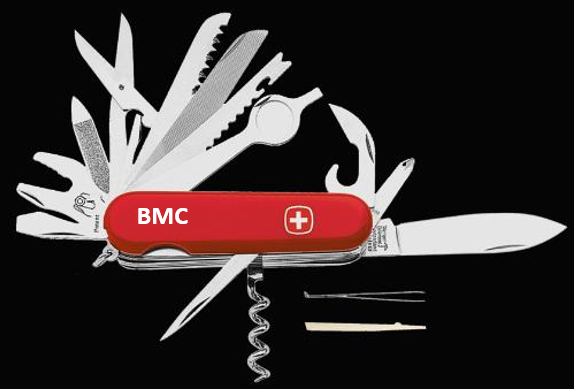
The Business Model Canvas Is A Swiss Army Knife For Innovation - You Need To Know When To Use Which Tool

Christian Dahlen & Oana Olteanu


Every product owner wants her new product to be successful. Every company prides itself for being innovative. Changes in software development tools and methodologies have made it much easier to build new products. New products are announced and developed at a rapid clip.


But how do we define success? In the software business, license agreements are rapidly being replaced with subscription models which need to be periodically renewed. These contracts can be cancelled at a moment’s notice if the customer does not receive value. And yet, many new offerings never get to customer mass adoption.


Clayton Christensen and Geoffrey Moore have extensively researched the failure of large, incumbent companies to innovate, particularly in the tech sector. Perhaps counterintuitively, their findings identified the inability of those companies to identify new customer needs and segments, and to change their Go-To-Market (GTM) approaches accordingly, as the main reasons of failure to innovate. Hence, innovation requires a company to think about the GTM strategy already in the idea phase.


The Business Model Canvas (BMC) and variations such as the Lean Canvas is a framework that has proven extremely useful to instill this thinking for startups. The canvas provides a holistic view of the business, and makes it easy to iterate on the sheer endless number of innovative business ideas before significant resources are being committed. In particular, the canvas forces startups to pay significant attention to identifying customer segments, marketing and sales channels, and revenue streams.


Less has been said about how larger companies can use the canvas to help innovate.


We used the Lean Canvas version for more than 70 software products across the whole stack, for new and for existing market segments, and at all stages of the product  lifecycle.  For each of the nine canvas tiles, we developed a set of diagnostic questions.


  • Idea stage - customer segments, problem statement, unique value proposition and unfair advantage

    We found the canvas to be particularly powerful when used as the first step in the Investment Readiness Level (IRL) assessment. The canvas is used to assess the potential of the idea before any time and effort are put into development. The problem/solution validation begins with focusing on one customer segment. The users of this customer segment are united by a shared paint point that they urgently need to solve, and they agree that the new solution will provide significantly improved value. Viability and desirability take a front seat and answer the salient question whether the idea is worth a product, and whether it is the right time to invest. The focus on the customer segment and the potential routes to market already highlights whether the innovation will be sustaining or disruptive.  

  • New product development stage - solution, revenue streams, channels

    Once a good idea has been pre qualified with the canvas, the team needs to iterate and find the Minimum Viable Product (MVP) based on customer feedback. The canvas keeps the team focused on the entire business model and fosters discussions among all parties accountable for the whole product. Once the MVP has been built, the focus is on scaling the customer base and developing the corresponding GTM to get to product/market fit. At that point, the canvas has been used to test the whole value chain from customer to revenue to channels. In particular, the right hand side of the canvas is combined with the IRL and can be used to assess whether a product is ready for launch.

  • Later versions and sunsetting stage - Customers, revenues, cost, and the whole canvas

    For mature products, a product owner needs to decide whether she wants to continue investing, maximize margin, or sunset a product. By evaluating the customer problem to be solved, revisiting users and buying centers, and testing the unique value proposition, we found the canvas to be a useful tool to help make these decisions. For example, in one case a product extension of an existing product to a new use case promised to generate new revenues, and justified significant new investment in development, while keeping the GTM the same.

The canvas is an incredibly rich and flexible tool set which, in large companies, becomes even more effective when combined with complementary frameworks such as the three horizons model, customer development and the investment readiness level scale. We found that the canvas is a must-have framework that helps diagnose and improve business model innovation by emphasizing that customer validation is essential for product adoption, thus for product success. Its usefulness is entirely driven by stressing the right topics at the right stage, and by asking the right questions for each of the canvas tiles.


Picture credits here and here.

Tuesday, August 4, 2015

Why Culture Needs to be the Fifth Element of any Company

Article reposted with permission from Oana Olteanu


Why Culture Needs to be the Fifth Element of any Company
Peter Thiel’s single most important piece of advice for Airbnb is ‘Don’t fuck up the culture’. Other executives and venture capitalists like Brian CheskyBen Horowitz, and Steve Jobs have expanded on why culture is important for a startup company, and Marc Andreessen's tweet ‘...Ruin Culture -> Destroy Company’ summarizes the point neatly. No doubt, culture is crucial for success.
The Fifth Element in the eponymous movie contains four stones with the classical elements. It combines them all into a divine light capable of defeating the evil . Company culture combines the power of other four elements: vision, mission, strategy and priorities.

Ten employees at a now large software company described the key values when they joined this company as a startup 30 years ago. These values were critical in turning the small startup into the highly successful market leader that it is today. They should be applicable to any budding startup team:

Read the rest of this post on the original site >>


Friday, January 30, 2015

Connect With Visionary Customers Face To Face, Hand To Hand

By Christian Dahlen & Oana Olteanu


There are two type of customer roles involved on the way to product/market fit: Executive sponsors - the buyers and decision makers -  meet at least twice a year. These executive sponsors provide validation of the use case and are future references to gain credibility in the market. A word of caution: As opposed to the users, they have much less patience for multiple product iterations.


The users act as sounding boards and listen to a product proposal such that the product team can explore and rehearse the proposition more fully to align the economic incentives of all the group members. This user sounding board function should not be confused with a council for market development or with industry advisory boards - those come at different stages of the development process.


The product team has one-on-one interactions with the users. It is fairly straightforward to define the minimum set of requirements, and hence iteration cycles can be rapid, using one hour feedback sessions every 2-4 weeks. Each iteration begins with the customer selecting which stories the team will implement during the iteration, and ends with the team producing something for the customer to react to. In these rapid iteration cycles, the team moves from storyboards to a prototype of the proposed user experience with minimal functionality in the least amount of time. With today’s tools, the prototype is quick and inexpensive to build. As long as the user experience is plausible, the backend processing and data can be simulated. A word of warning: Users tend to provide positive feedback during all stages, until they actually have to use the product.


These one-on-one relationships help establish clear accountability on both sides. Initial on-site workshops with select customers are helpful in building rapport, but remote video conferencing interactions are perfectly suited for the monthly follow-up. The value from these interactive user interviews is far higher than from any type of survey or from indirect feedback.


These visionary customers are part of the team and deserve to be rewarded, feted and nurtured: Invite them to company customer events, award them with certificates for their part in the effort, and leverage them in promoting the new product.


Many thanks to Allen Bannon and Ryan Nichols for providing input and feedback.

Photo credits: gettyimages.com

Focus On Business Outcomes And Drop The Features

By Christian Dahlen & Oana Olteanu


On the road to defining a minimum viable product (MVP), individual customers would be expected to have a very limited frame of reference. By definition, they cannot imagine what they don’t know about emerging technologies. Even the visionaries should not be trusted to come up with solutions, rather, customers should be asked only for outcomes, i.e. what a new product can do for them. Otherwise, one of the dangers of listening too closely is the tendency to make incremental improvements.


The product owner articulates her best hypothesis as to what value will drive customers to adopt her product, the business model to deliver the product, and which customers the product is most relevant to. The business values are defined and periodically measured to verify that the practice is working. The business value can be determined by ranking the relative importance of the business value/outcome for the customers. In one case, the customers were given $100 in play money which they could allocate to the business values they wanted most and the results were stack ranked to yield the most important elements.

To minimize feature creep, the product owner needs to understand how upset the customer would be if a feature would be taken away. In one case, it turned out that 80% of the planned features were not related to any of the top business values requested. A final word of caution: For certain types of solutions, business value is only created if people actually derive some personal value from using the solution.


For new versions of existing products, it is not about what a particular customer thinks is important to add. Instead, the product owner needs to focus relentlessly on studying the live use of the business value metrics - what matters is what actually moves the needle on the metrics that matter.
We have heard of one executive who uses a very low fidelity MVP to identify the initial price point. She then picks a number - say $50 thousand - , and asks a customer whether they are willing to pay that amount. Before the conversation with the next company, she doubles the price, until she hits the ceiling. She does this by talking to as many companies as needed, typically between 10 and 20. By overpricing and underselling, she can gauge the level of gain customers experience via the amount that they are willing to pay.

Read next: How to engage with users and with buyers.

Special thanks to Allen Bannon, Ryan Nichols and Riley Scott for their insights.


Photo credits: fantastique-arts.com

Understand The Personas Of Users And Of Buyers


By Christian Dahlen & Oana Olteanu

To build a minimum viable product (MVP), it is critical to identify the end users and the person who benefits economically. In the SaaS world, the users are absolutely vital for adoption and retention, and user personas and buyer personas are often synonymous. In large and complex corporate sales, the end user may often have little influence in the sales process.

Key stakeholders in the buying decision - the decision maker or their key influencer -  should be sought out to become the executive sponsors. These sponsors should be developed into a buyer persona describe the ideal customer to help the product owner make decisions about the right marketing and sales processes.

The executive sponsors nominate the user whose job will be made easier by the product.  A deep understanding of the users needs and motivations is vital to define the MVP. A release can only be for a single persona at a time, and therefore it is just as important to decide who a release is for, and who it is not.   

Read next: The mechanics of engaging with the different customer personas.

Photo credits: timigustafson.com

It Takes 10 Visionary Customers To Play The Game

By Christian Dahlen & Oana Olteanu


A product owner needs to work closely with visionaries to develop a product that will meet the need of thousands of customers and millions of users. In almost all cases, working with a single customer will result in a product which does not scale to other customers, with one possible exception: The first customer is a standard setting lighthouse customer in its industry segment; the ‘job to be done’ has already been widely adopted by others.


It is always difficult to recruit multiple charter users and customers without much more than a storyboard. If it is impossible, it is very likely that the product owner is chasing a problem that is not urgent or important. For teams in an accelerator program, finding enough customers within the prescribed three month period until the demo day can be major issue. For product teams in large enterprises, the pressure of a marketing driven release schedule often cuts short the time spent on customer development in favor of frantic engineering activity.


There is agreement that about ten customers in the target market segment is a good number to get to product/market fit. To get to ten actual customers, the team will need to talk to hundreds of people. Only a few dozen will be in the eventual target group, and less than 25 will have the appetite to move forward. Those ten customers will lead to about five reference customers that publicly state their use and satisfaction with the product.

Read next: How to focus on business outcomes and not features.


Special thanks to Allen Bannon, Ryan Nichols, and Riley Scott for their insights.

Photo credits: wallpaper-kid.com.com