Tuesday, February 2, 2016

2 Things Albert Einstein Taught Us About Ideas

In today’s world, the cost of validating the desirability and viability of an idea have dramatically decreased. Kickstarter has become de rigeur for funding new hardware ideas. The proliferation of open source software has made building applications easier and cheaper. Venture capital firms and and service providers such as Mattermark and CBInsights have heavily invested in analyzing the many readily available signals to identify future unicorn startups early on.

planck einstein.png
As those signals proliferate and become transparent, professional investors will quickly coalesce around consensus good ideas, angel investors will have to focus even more on the earliest pre seed stages where transparency is low, metrics are not available, and the entrepreneur only has an idea. A Minimum Viable Product may not exist yet and the team is in the problem/solution validation stage, at best. In fact, angel investing and the skill sets required from angel investors may return to where they were in the 20th century.


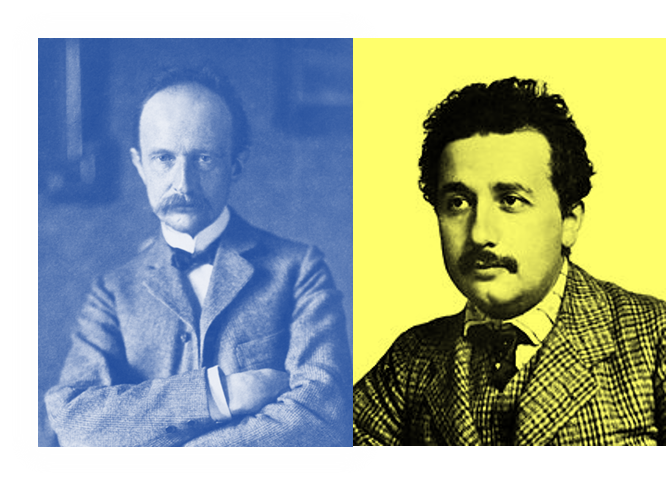
The two people in the picture above illustrate that this is not an entirely new challenge. In 1905, Max Planck was a 47 year old physics professor in Germany. Albert Einstein was a 26 year old assistant patent examiner in Switzerland. He had previously published five papers in the field of thermodynamics and was virtually unknown in the field of elementary physics and in academic research circles. In the same year and seemingly out of nowhere, he published four papers which revolutionized the world’s thinking about physics. Yet, the only experiments to prove any of his theses were ‘Gedankenexperimente’ - thought experiments. The questions which everyone in the field had to ask themselves at the time were 'Is the author trustworthy?' and 'Are the ideas valid?' Planck was very much in the position of an angel investor having to assess whether there was any credibility to the idea and the idea alone.

Dark horse founders without obvious track records emerge all the time.  Albert Einstein already observed that ‘anyone who has never made a mistake has never tried anything new’. Angel investors may have to make an investment decision solely based on the founder and their idea. They need to assess the qualities of a founding team and the right timing of founders and their ideas.
As Albert Einstein said: ‘If at first the idea is not absurd, then there is no hope for it'.


Thanks to Oana Olteanu for reading drafts.

Friday, January 8, 2016

2015 Angel Investing Review And 2016 Trends

Looking back at my 2014 resolutions I pretty much stuck to what I had envisioned: I worked very closely with some startups in my portfolio and tried to get them on the path to cash flow neutral. I led the first deal with the Band of Angels. My network building activities were largely focused on Germany where I am increasingly getting clued into the venture capital and startup ecosystem.


2015 2016.png


How did the markets fare in 2015?

Public markets treaded water. The DJII started 2015 at 17823 and ended at 17425. The six year runup which started at the 7062  low point in February 2009 has come to a halt. The tech IPO pipeline bore very few exits in the first half of the year, and Square was the only better known company that was able to go public after the summer. Presumably, there still are 531 tech companies in the IPO pipeline, and 145 unicorn companies. Some unicorns may turn out be undercorns.
While the above trends are important when it comes to exits, angel investors play at the seed stage. Valuations were still high and seed money was still flushing around like it had been printed yesterday, although the investing pace may have cooled off just ever so slightly. It is worth pointing out three events and trends that may lead to future disruption in the seed investing space
  • Angellist raised $400m from CSC to be invested with the top 50 Angellist syndicate leads, effectively doubling the amount that has been invested via the platform so far.
  • A seed investment in Silicon Valley now means $1 to $1.5 million invested at a $6 million pre money valuation. Current seed capital firms have raised larger funds and have become the new Series A investors. New pre-seed investors are likely to fill the gap and make the first investments in the $200 to $500 thousand range.
  • The quantification of startup signals is continuing and now extends to the earliest stages. Large VC firms have invested heavily in this, and third parties such as Mattermark and CBInsights are providing related products and services.


How is my angel investment portfolio performing?

According to CB Insights, 22% of all companies that raised a seed in 2009-2010 have had an exit. To gain a perspective, let’s look at the statistics based on 11 investments between 2009 and 2013: Three are dead, and the money is gone. Four exits have made some money or have the potential to make money.  7 of the 11 investments have raised follow on funding. In 2015, Readypulse raised $5 million Series A funding in March,  only to be followed by Retailnext raising a whopping $125 million Series E in April.


I made two new investments. I led the Band of Angel’s investment in Savvy where Thomas Arend and Hamish Chandra are building a global platform where learners and teachers connect for live, one on one video learning sessions.

Where did all the time go?

I closely worked with the CEOs of two of my 2014 investments. We discussed fundraising strategies, hiring, M&A and a range of other strategy and management topics. I took many trips to Germany, and in particular to Berlin, and connected with VCs, angels and startup CEOs to understand the startup scene in Germany and in Europe. As in prior years, I was also heavily involved in deal screening, coaching and mentoring. I looked at more than 100 potential deals and talked with as many startups. My blogging activities centered around ‘how to invest’ and ‘how to manage’: Founders and markets, the elusive Minimum Viable Product, and the Business Model Canvas, just to mention a few.


What is ahead for 2016?

It is anyone’s guess what the markets will do in 2016, but 2015 ended on a jittery note. The economy in China is headed southwards. The IPO pipeline is bursting with unicorn candidates, although some of these will certainly be relegated from that list. And while Black Swan events by definition cannot be predicted, it is worth observing that there haven’t been any for many years now.


Venture funds need to deploy money in Q1, but that may be it.The pressure on startups to generate traction, a. k. a. revenues, will continue to increase and will separate the wheat from the chaff when it comes to raising the next round of funds. Not much new here, really.

Ideas will become more important again as ‘momentum’ investing and FOMO will die out. The quantification of early startup traction will further commoditize investing, and will force investors to engage in more due diligence.

B2B2C Is Dead. Long Live B2C2B!

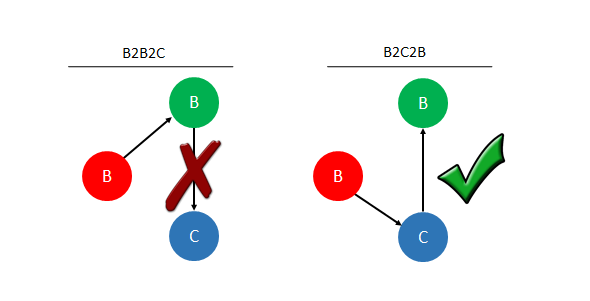
Many startup and mature software companies are looking for Business-to-Business-to-Consumer (B2B2C) models as a new business opportunity to sell to other businesses. The idea is to start with a B2B approach, and then offer the services to the customers or employees of those enterprises.


In fact, consumer packaged goods manufacturers (CPGs) are a key target group. Why? CPGs want to build relationships with their end consumers, a relationship that has been typically owned by intermediaries such as retailers and restaurants.


I have seen numerous startup initiatives with CPGs and in other industries fail: A warranty app that wanted to connect end users to manufacturers. A bar app that wanted to connect patrons to beverage producers. Healthcare apps that wanted to connect patients for specific diseases with doctors and hospitals. An app for non-profit organizations that wanted to provide donors with a complete experience.


However, these businesses - the ‘B’ in the middle of B2B2C - typically lack the understanding of their end customers behaviors. They also know that they don’t know their end customers, and that is why they are interested others providing B2B2C apps. So if the first B - the startup providing a service - and the second B - the business customer - are both lacking in understanding the end customer C, nothing good will happen.


b2c2b.png


Ultimately this is the classic case of differentiating between users and buyers. A product needs to delivers value to end users, and only when it is desirable, it will also become viable with buyers. Building a successful product therefore requires an intimate understanding of the end customer, and is no different than any other B2C model, whether the target is a consumer, or an employee in a company. LinkedIn, Glassdoor, Box and many other SaaS startups are successful examples: Often, the product is free for the end user. Above and beyond the individual usage, the value to the business customer lies in the interaction and the analytics. The products are often seeded with user generated content using a ‘give to get’ model where for people to see information they have to post own data. As Tom Besse of Glassdoor said ‘you need to focus on something or someone so people will start talking about you’.


So there are no shortcuts to building products for businesses and their end customers and employees, but there are dead alleys. 

Stop calling it B2B2C - if a five letter acronym is required, B2C2B is the only path that will lead to a successful outcome.


Photo credit: chessbaron.ca

Sunday, November 29, 2015

Startup Founders: Vision, Determination, and Friendship

Investors are always looking for the next founder of a $1 billion valued startup, the so called unicorn. The next Steve Jobs. The next Bill Gates. The next Elon Musk. The next Larry Page.

four founder pairs.png


But truth be told: How does an investor realize that  the next superstar founder is in front of their eyes?  What are the tell tale signs, especially if the founder has no discernible track record? What if the founder is great, but the idea is just an average idea?


In 2013, Cowboy Ventures analyzed the characteristics of founders of unicorn companies. These companies had thirtysomething year old founders with a shared history. At least one of the co-founders had co-founded a company before. One or more of the founders had a technical degree, and had prior experience working in tech/software.


Cowboy’s analysis was purely data driven, and was not able to shed any light on the qualities of the founders. Looking back at the past may not be a useful predictor of the future. For example, the thirtysomething year old founder criterion would have excluded Gates, Jobs, Musk and Page. Oops.


What then are relevant criteria for finding unicorn founders?  The least worst option is to look at key qualities that successful founders exhibit. As Vince Lombardi said, ‘The quality of a person's life is in direct proportion to their commitment to excellence, regardless of their chosen field of endeavor.’


Vision
The founder’s ability to articulate the value that the product delivers today is at the core of any vision. A founder needs to think ahead for five to ten years: What is the compelling value for the user? What kind of business could it be? Are there comparable businesses? What will the world look like? What do you want to be when you grow up? To paraphrase Lewis Carroll: Do you know where you are going?
Investors should be looking for founder/market fit. Peter Thiel’s ‘secret’ is a good way to go beyond just book learning and get to the level of insights that founders have: ‘What do you understand about your business that other companies in it just don’t get?’ Paul Graham of Y Combinator points out that imagination is critical to come up with new ideas.
One word of caution: Vision without execution is just hallucination. In their application, Y Combinator is asking for the most impressive thing that each founder has built or achieved, other than the idea they are applying with.


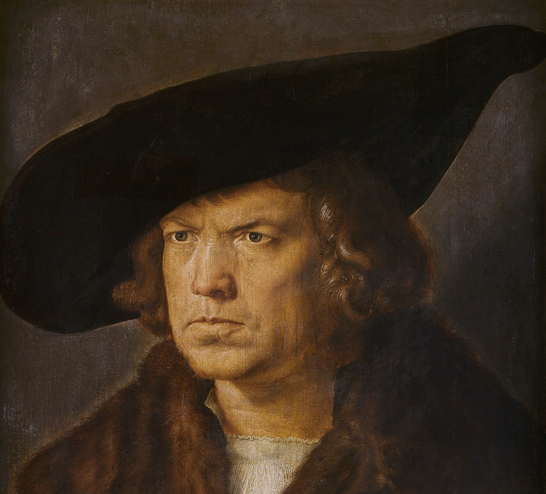
duerer.PNG

Determination and focus
In optics, focus means that everything converges. In a startup, it is important to get rid of all distractions and focus on what is essential. Peter Thiel: ‘It does matter what you do. You should focus relentlessly on something you're good at doing, but before that you must think hard about whether it will be valuable in the future.’  Paul Graham: ‘...as long as you're over a certain threshold of intelligence, what matters most is determination.’ Elon Musk: ‘Focus on signal over noise’.
There are tell tale signs in the language and in the actions of focused founders. The conjunction ‘or’ is their worst enemy. ‘And’ is the second worst enemy. Saying ‘no’ is essential, and it happens frequently.


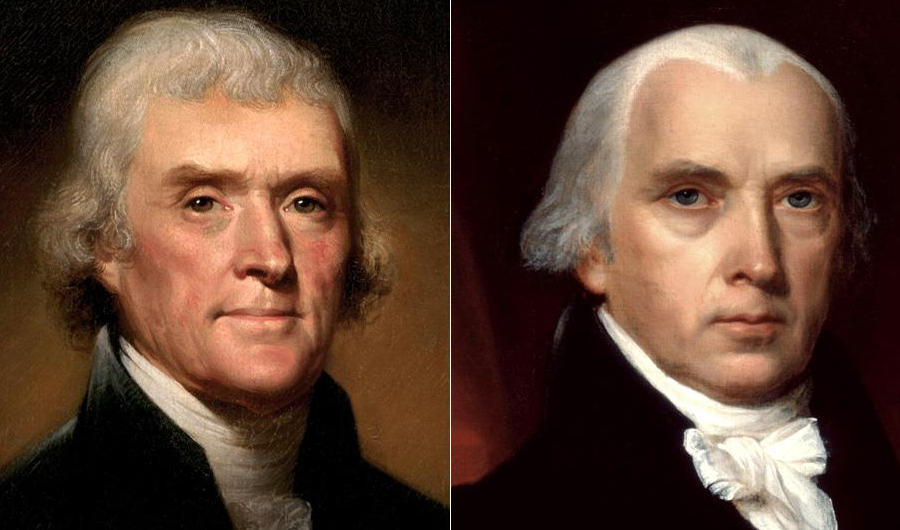
jefferson madison.PNG


Friendship
Founders need to enjoy hanging out together, which is probably easier done when you are young. These are not casual acquaintances, but instead require shared interests and an extraordinary commitment to each other. Steve Jobs and Stephen Wozniak, Bill Gates and Paul Allen, Elon and Kimbal Musk, Larry Page and Sergey Brin. Y Combinator’s application is asking ‘Please tell us more about an interesting project, preferably outside of class or work, that two or more of you created together’.
Eventually many of these founders go it alone, but partnership is critical in the early years.

Other qualities in supporting roles are a sense of humor bordering on naughtiness, brains and education, and energy and passion. Niceness has never been mentioned as a critical quality, ever.


Will success be guaranteed if all these qualities are evident?


It is impossible to assess these qualities after the hero’s narrative has been created. But one can safely assume that Y Combinator has systematically evaluated their thousands of applicants accepted into the program. And indeed, Y combinator has produced outsize returns. But many of the startups in their programs have failed. Many successful program startups will not become unicorns. Hence, these desired qualities can only serve as references. Founders may not score the highest marks on all desired qualities, but at a minimum, they are outliers in at least one category. McKinsey & Company call it ‘having a spike.’


Investors should always consider the option value of investing in great teams, even if the founders don’t find a great market the first time and the financial investment has to be written off. GO was a well documented example of a terrific team that met an unsuccessful outcome. Investing in any of their team members in later ventures would have yielded significant returns.


Picture credits: Extremetech, wired.com, biography.com, itproportal.com

Thursday, November 12, 2015

Winning Founders Find Great Markets

Prominent investors like Chris Dixon and Brad Feld highlighted the importance of founder/market fit. Andy Rachleff and Marc Andreessen postulated that the ‘market always wins’, asserting that a market trumps the team. And to amplify the different outcomes, Rachleff labeled teams and markets either  ‘great’ or ‘lousy’. If a team stumbles onto a great market, good things will happen.


Predicting a great market is difficult, if not impossible. Value creation and new market segments arise from external shocks such as changes in demand, regulation and technology. The magnitude and the timing of these shocks are what makes the difference between ‘lousy’ and ‘great’.


This leaves early stage investors with the age old conundrum of what to invest in: Founders? Ideas? Markets?


It is a long way from a founding team to a business and to market success. Founders have to go through multiple iterations before hitting upon the best idea. An idea that can’t get to a minimum viable product (MVP) is worthless. An MVP that doesn’t scale to a business remains a hobby. And businesses which don’t disrupt markets  will not be very valuable.


founders to markets.PNG

Investors cannot fund markets, but they can back great founders and their ideas. And a great team will abandon a business in a lousy market to reset and move into a great market - that’s what makes them truly distinctive. So the main job of the investor is to go out and find that extraordinary team. And be patient until they find that disruptive idea with great market potential.

Monday, October 19, 2015

Enterprise Startups in Germany - Where to Look


In a past blog post I hypothesized that enterprise SW related startups do exist in Europe, but that they are hard to find. I now used the data from the recently published annual German Startup Monitor survey* to test this hypothesis for B2B startups. I also wanted to find the best hunting ground for investors in Germany.


The key takeaways for investors to find enterprise focused startups?


Berlin is by far the largest breeding ground for enterprise startups. These startups have easier access to capital to speed up growth. The ready availability of talent makes internationalization strategies easier to pursue.

  • More than 50% of all startups in the survey are B2B focused (although not all B2B startups are in software)
  • The unofficial startup capital Berlin has more than three times as many (B2B) startups as any of the other regions surveyed
  • Berlin has the best access to domestic and international venture capital
  • The startups in the industrialized Southwest region of Stuttgart/Karlsruhe are predominantly B2B focused, but there was only one fourth as many startups compared to Berlin
  • Stuttgart/Karlsruhe startups have little access to venture capital. Hence, they are more often self financed compared other regions, including Berlin


Contrary to public - and media - opinion, B2B startups exist


More than 50% of all surveyed startups are B2B focused. That percentage even reaches 80% in the Southwest. Since there are four times as many startups in Berlin, Berlin also has the highest absolute number of B2B startups.


Only half of all startups consider themselves innovative enough to go international


Investors with large aspirations should be concerned about the lack of internationalization and innovation. There is a clear bifurcation among startups: Only half of the startups have ambitions to compete globally or across Europe. The other half is not even trying: Innovation, if there is any, is limited to Germany, or only to a region in Germany.


Internationalization seems easier to pursue for Berlin based startups. Here, one third of startup employees are from outside of Germany.


Self funding is common


Across the country, 20% of startups have not raised outside funding at all. In the Southwest, that ratio reaches 25%. These companies may have never been noticed by angel investors, venture capitalists, and journalists. In terms of public awareness, they are flying under the radar. In Berlin, that share is only 10%. One reason is the ready availability of angel and venture capital.


Berlin has the the best access to (international) venture money


Across the country, one third of all startups are using capital from business angels. Venture capitalist have  funded 30% of Berlin startups, versus 8% in the Southwest. Berlin also has the highest share of international venture capitalists with over 30%. In the Southwest that percentage drops to less than 5%.


*The survey is based on self-disclosed data and was published in September 2015. The survey compared five regional clusters across Germany.


Photo credit: thisrecording.com